

- Welcome!
- What is Authentic Assessment?
- Authentic Assessment Characteristics
- Brightspace Overview
- Brightspace, Accessibility, and UDL
- Types of Authentic Assessment
- Significance for Student Learning
- Designing Authentic Assessments in Brightspace
- Authentic Assessment + Brightspace
- Examples of Authentic Assessments in Brightspace
- Challenges and Solutions
- Conclusion
- Collaborate with Padlet
- Sources
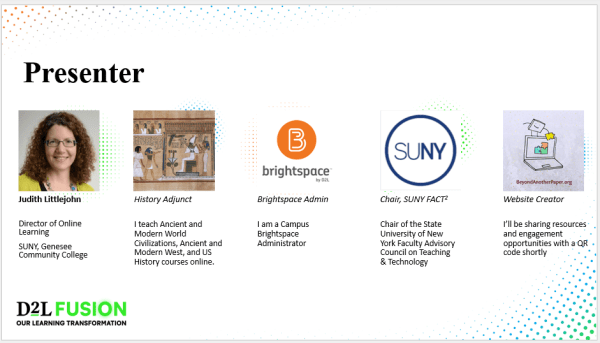
- About the Author
Welcome!
Welcome to a topic that is at the forefront of modern higher education: “Asynchronous Authentic Assessment.” In an era marked by rapid technological advancements and the evolving needs of learners, the way we assess and prepare our students for the real world has undergone a profound transformation.
The heart of education lies not just in the transfer of knowledge but in equipping our students with the skills, competencies, and experiences they need to thrive in an ever-changing landscape. It is in this context that we find asynchronous authentic assessment, a powerful pedagogical approach that bridges the gap between traditional classroom assessments and the demands of the 21st century.
We’ll also discuss the Brightspace tools that make it easy to set up authentic assessments in our courses, how Brightspace compares to Universal Design for Learning principles and accessibility in general, how evidence-based learning practices fit into these assessments, and how we can share ideas, questions, and examples going forward.

Uncover the significance of asynchronous authentic assessment, discover the diverse tools at our disposal within Brightspace, learn about best practices for Universal Design for Learning (UDL) and evidence-based learning practices, and share/collaborate with your peers in Padlet.
What is Authentic Assessment?
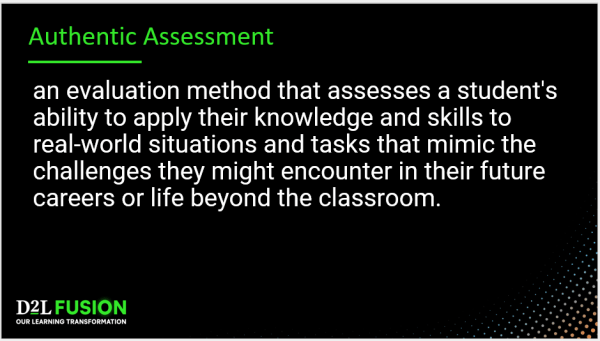
Authentic Assessments gauge a student’s ability to apply their knowledge and skills to real-world (I say that in air quotes) situations and tasks that mimic the challenges they might encounter in the workplace.
The Lit Review for Authentic Assessment is robust; there are many characteristics and elements that should be considered when implementing an authentic assessment approach. The standard characteristics presented here were in place prior to Covid-19; since that time, there is growing interest in pausing to consider the value the student finds in authentic assessment, and to underscore the fact that social and personal value are as important, or significant, for deep learning as career skills, and that students already are part of the “real world.” (McArthur, 2022)
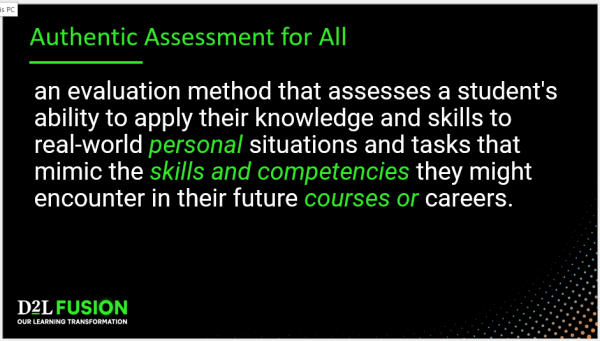
I find the traditional definition limiting because, as a community college employee, I know that my students live in the real world now, and need additional skills such as problem-solving, critical thinking, collaboration, decision-making, and communication in order to land a job.
I also believe that general education courses, such as the history courses I teach, or any communication courses, social sciences, foreign language, and so on, have value and can enhance an individual’s life experience and well-being – students need to be able to relate to their general education courses in a way that personalizes their learning experience and highlights the “soft skills” and community-benefitting talents they bring to the table; this is why I edit the definition of Authentic Assessment for All, and implement a variation of these assessments in my courses.
Authentic Assessment Characteristics
Key Characteristics of Authentic Assessment:
- Real-World Context: Authentic assessments present scenarios, problems, or challenges that students are likely to encounter outside the classroom. These scenarios mirror the complexities of their future workplaces or real-life situations.
- Complex Problem-Solving: Instead of simple recall or memorization, authentic assessments require students to engage in critical thinking, problem-solving, and decision-making. They often involve open-ended questions or tasks.
- Application of Knowledge and Skills: Students are expected to draw upon their knowledge and skills acquired during the course to address the assessment tasks. This goes beyond rote learning and encourages deeper comprehension.
- Multiple Perspectives: Authentic assessments often allow for multiple perspectives and solutions. They acknowledge that real-life problems don’t always have one “right” answer but require thoughtful analysis and consideration.
- Reflection and Self-Assessment: Authentic assessments often include opportunities for students to reflect on their work, self-assess, and identify areas for improvement. This promotes metacognition and self-directed learning.
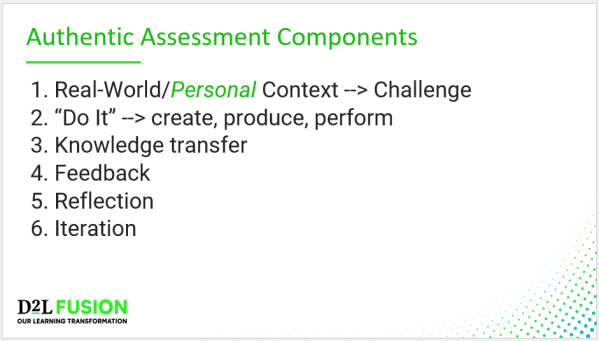
- Iteration: Authentic Assessments start with a real-world or personal context which challenges the student to think through the solution. The student must Do It; that is, they must work through the problem and solve the challenge, transferring their academic knowledge to the challenge at hand. As the instructor, I then provide feedback to the students, and they can reflect on what they did and the feedback, and try it again if needed. This give-and-take effort allows the student to explore and experiment; if their “solution”, or response to the challenge, is way off base, my feedback can steer them back.
Brightspace Overview
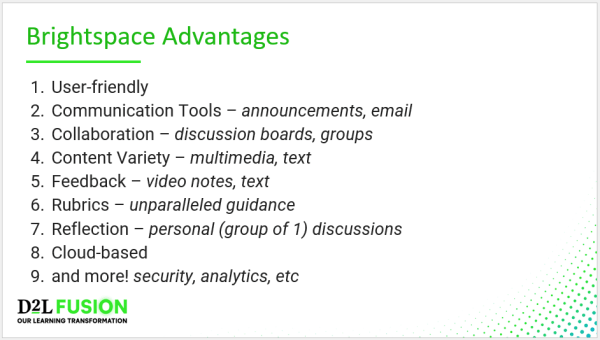
Brightspace: A Learning Management System (LMS) at a Glance:
As we delve deeper into the world of asynchronous authentic assessment within Brightspace, let’s take a moment to understand what Brightspace is and why it plays a pivotal role in modern higher education.
Brightspace, developed by D2L (Desire2Learn), is a robust, cloud-based learning management system (LMS) designed to facilitate online and blended learning experiences. It offers a comprehensive suite of tools and features that empower educators and institutions to create engaging and effective digital learning environments.
Key Features of Brightspace:
- Intuitive User Interface: Brightspace is known for its user-friendly interface, making it easy for both instructors and students to navigate and access course materials.
- Content Creation: Instructors can create and organize course content, including multimedia resources, assignments, quizzes, and assessments, all within the platform.
- Communication and Collaboration: Brightspace provides tools for communication and collaboration, such as discussion boards, messaging, and group workspaces, fostering meaningful interactions among students and instructors.
- Assessment and Grading: The LMS offers diverse assessment options, including quizzes, assignments, and rubrics, with customizable grading features. It also integrates with tools for plagiarism detection.
- Analytics and Insights: Brightspace provides analytics and reporting features that allow educators to track student progress, identify areas of improvement, and make data-driven decisions.
- Accessibility: Accessibility is a top priority for Brightspace, ensuring that all students, including those with disabilities, can access course content and materials.
Popularity and Usage in Higher Education:
Brightspace has gained significant popularity and is widely used in higher education institutions around the world. Its adoption is driven by several key factors:
- Scalability: Brightspace is designed to accommodate the needs of institutions of all sizes, from small colleges to large universities.
- Adaptive Learning: It supports a variety of teaching and learning models, making it suitable for traditional, online, and blended courses.
- Continuous Improvement: D2L continually updates and enhances the platform based on feedback from educators, staying at the forefront of educational technology.
- Data Security: Brightspace prioritizes data security and compliance with privacy regulations, providing peace of mind to institutions and students.
- Engagement and Accessibility: Its user-friendly interface and commitment to accessibility make it a popular choice for creating inclusive learning environments.
Brightspace, Accessibility, and UDL
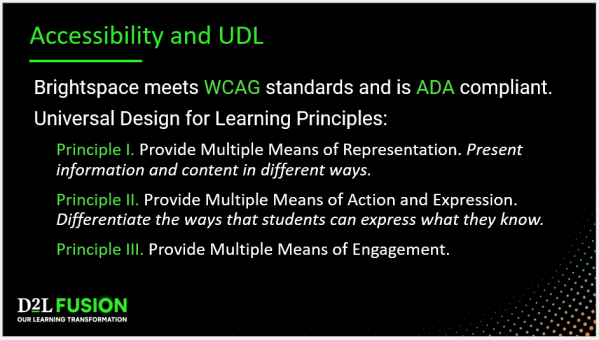
Content in Brightspace is inherently accessible if you use the built-in templates and tools. This is wonderful, because, we know in the US that 65% of students who had accommodations for disabilities in high school do not follow up and apply for accommodations in college. When we know our content is accessible, those students can use screen readers, magnifiers, and any other adaptive equipment or assistive devices to access their course materials without any problems.
Accessibility works hand-in-hand with Universal Design for Learning, so that our courses can be inclusive and designed for all students to succeed.
Read about D2L’s commitment to accessibility
Now that we have a solid understanding of authentic assessment and the significance of asynchronous learning, let’s explore how Brightspace, as a leading learning management system, facilitates authentic assessment and enhances its effectiveness.
1. Alignment with Real-World Scenarios:
Brightspace is inherently designed to align with real-world scenarios. Instructors can create assessments that mirror the complexities and challenges students may encounter in their future careers or life beyond the classroom. Whether it’s solving complex problems, analyzing case studies, or working on collaborative projects, Brightspace offers a versatile canvas for crafting authentic assessment experiences.
2. Diverse Assessment Types:
Authentic assessment is not one-size-fits-all, and Brightspace recognizes this. The platform provides a wide range of assessment types, from traditional quizzes and assignments to discussion boards, peer assessments, and project submissions. Instructors have the flexibility to choose the most suitable assessment method for their learning objectives, ensuring authenticity and relevance.
3. Multimedia Integration:
Incorporating multimedia elements enhances the authenticity of assessments. Brightspace allows instructors to seamlessly integrate multimedia resources such as videos, images, and interactive simulations into assessments. This feature empowers students to engage with content in a multimodal manner, which is reflective of real-life learning experiences.
4. Rubrics and Feedback:
Authentic assessment often involves open-ended questions and complex problem-solving. Brightspace provides robust rubric-building tools that enable instructors to define clear evaluation criteria. Additionally, instructors can provide detailed feedback on student work, fostering a deeper understanding of strengths and areas for improvement.
5. Self-Paced Assessment:
One of the key advantages of Brightspace is its support for asynchronous learning. This means that students can access and complete assessments at their own pace, ensuring that they have the time needed to engage deeply with the content and demonstrate their authentic understanding.
6. Analytics and Insights:
Brightspace’s analytics and reporting features empower instructors to gain insights into student performance. By tracking individual and group progress, instructors can identify students who may need additional support and tailor their teaching strategies accordingly, ensuring a more personalized and effective learning experience.
7. Accessibility and Inclusivity:
Authentic assessment should be accessible to all students. Brightspace places a strong emphasis on accessibility, making it possible for students with disabilities to engage fully with assessment materials. This commitment to inclusivity ensures that the assessment process is fair and equitable for all learners.
Brightspace is a platform designed with the pedagogical principles of authentic assessment in mind. It offers a rich array of tools and features that empower instructors to create meaningful and effective assessment experiences that prepare students for the challenges of the real world.
Types of Authentic Assessment

Exploring Various Types of Authentic Assessments:
I’ve included a list of authentic assessment types to help get ideas flowing – depending on the learning objectives your students must meet, they can create sales pitches, podcasts, posters, blog posts, songs, poems, social media campaigns, they can write policies, run fundraisers, conduct interviews, solve problems, create infographics, video presentations, and experiments – whatever works for your course and content.
Authentic assessment is a dynamic approach that allows students to demonstrate their understanding and skills in ways that reflect real-world applications. A closer look at a few examples:
1. Case Studies:
Definition: Case studies present students with real or hypothetical scenarios that require analysis, critical thinking, and problem-solving. These assessments often involve in-depth exploration of a particular situation, decision-making, and reflection.
Example: In a nursing program, students may be given a patient case study, complete with medical records, symptoms, and history. They must diagnose the patient’s condition, outline a treatment plan, and provide justifications for their decisions.
2. Project-Based Assessments:
Definition: Project-based assessments task students with creating a tangible product or solution that addresses a real-world problem or challenge. These assessments emphasize creativity, collaboration, and practical application of knowledge.
Example: In a business course, students could be asked to develop a comprehensive business plan for a startup idea. This involves market research, financial projections, and a presentation of their plan to potential investors, mirroring the tasks of entrepreneurs.
3. Problem-Based Assessments:
Definition: Problem-based assessments present students with authentic, complex problems that require them to analyze, research, and devise solutions. These assessments encourage critical thinking and independent inquiry.
Example: In an environmental science class, students may be given a real environmental issue, such as pollution in a local river. They are tasked with conducting research, proposing solutions, and presenting their findings to local authorities.
4. Simulation and Role-Playing:
Definition: Simulation and role-playing assessments immerse students in scenarios where they assume specific roles, interact with others, and make decisions based on the context. These assessments enhance decision-making, empathy, and communication skills.
Example: In a psychology course, students could participate in a simulated counseling session, with one student playing the role of the therapist and another as the client. This allows students to apply counseling techniques and interpersonal skills.
5. Portfolio Assessment:
Definition: Portfolio assessment involves students compiling a collection of their work over time, demonstrating growth, reflection, and the application of knowledge and skills. Portfolios can include written assignments, projects, and reflections.
Example: In an English literature program, students maintain a portfolio that includes essays, literary analyses, and creative writing pieces. They also write reflections on their growth as writers and critical thinkers throughout the semester.
6. Authentic Experiments and Lab Work:
Definition: In science and engineering disciplines, authentic experiments and lab work involve conducting real experiments or research projects. Students collect data, analyze results, and draw conclusions as they would in professional settings.
Example: In a chemistry course, students conduct experiments to synthesize new compounds, analyze their properties, and draw conclusions about their potential applications or implications for scientific research.
Incorporating a variety of these authentic assessment types within Brightspace not only enriches the learning experience but also equips students with the skills and competencies needed to excel in their future endeavors. As we proceed, we will explore practical strategies for implementing these assessment types within the Brightspace platform, fostering a holistic and real-world approach to education.
Significance for Student Learning
Importance for Student Learning:
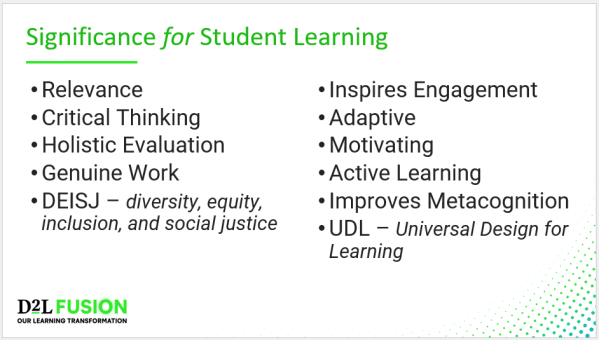
- Relevance: Authentic assessments bridge the gap between theory and practice. They make learning relevant by demonstrating how knowledge and skills can be applied in real-life contexts. This relevance enhances student engagement and motivation.
- Critical Thinking: These assessments challenge students to think critically and creatively. They encourage deep understanding and problem-solving skills that are invaluable in their academic and professional journeys.
- Preparation for the Real World: In today’s rapidly evolving job market, employers seek candidates who can adapt to real-world challenges. Authentic assessments prepare students for these challenges by equipping them with practical skills and experiences.
- Holistic Evaluation: Authentic assessments provide a more holistic view of a student’s abilities. They go beyond standardized testing and consider a student’s ability to think critically, communicate effectively, and work collaboratively.
- Lifelong Learning: By engaging in authentic assessments, students develop a mindset of lifelong learning. They understand that learning is not confined to the classroom but is a continuous journey throughout their lives.
When students work on these assessments, they see the relevance of their work to the course content and, hopefully, to their own learning and goals. They employ critical thinking skills and produce genuine work, as opposed to searching for something someone else created. I think of it as a more holistic evaluation, especially when the students are given choices and some input to the assessment process.
These assessments further our goals for diversity, equity, inclusion, and social justice because each student is demonstrating their own learning progress in a personal way, which results in increased engagement and active learning. Together, these pieces improve metacognition as students reflect on what they’ve learned and why, how it relates to their course, and how they can best demonstrate their knowledge and skills. Encouraging students to think about their learning, and improve on their work, helps build metacognition.
Authentic Assessment is not just an evaluation method; it’s a pedagogical approach that prepares students for success in a complex, ever-changing world. As we explore how to incorporate authentic assessment within the Brightspace platform, remember that this approach aligns with our mission to empower students with the skills and knowledge they need to thrive.
Designing Authentic Assessments in Brightspace
Crafting Real-World Assessment Experiences
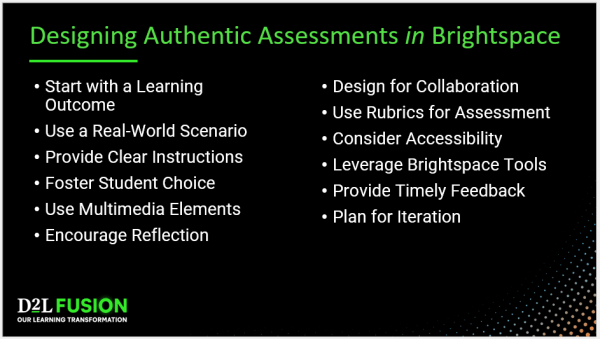
Now that we’ve explored the types of authentic assessments, let’s delve into how you can effectively design these assessments within the Brightspace platform. Creating authentic assessments that engage students and reflect real-world competencies is a thoughtful process, and here are some key tips to consider:
1. Define Clear Learning Outcomes:
- Start by defining clear and specific learning outcomes. What do you want students to achieve through this assessment? Ensure that these outcomes align with the course objectives.
2. Embrace Real-World Scenarios:
- Authentic assessments should mirror real-world scenarios or challenges. Think about how the assessment can relate to students’ future careers or practical situations they may encounter.
3. Provide Clear Instructions:
- Clear and concise instructions are crucial. Ensure that students understand the assessment task, the criteria for evaluation, and any specific requirements.
4. Foster Student Choice:
- Whenever possible, allow students to choose topics or approaches for their assessments. This promotes engagement and personalization.
5. Incorporate Multimedia Elements:
- Brightspace allows you to integrate multimedia elements seamlessly. Consider including videos, images, or interactive content to enhance the authenticity of the assessment.
6. Encourage Reflection:
- Authentic assessments often include a reflective component. Ask students to reflect on their work, their problem-solving processes, and the skills they’ve developed.
7. Design for Collaboration:
- In real-life situations, collaboration is key. Consider group assessments that require students to work together, fostering teamwork and communication.
8. Include Peer Review:
- Peer assessment is a valuable component of many authentic assessments. Brightspace facilitates peer review, allowing students to evaluate their peers’ work against predefined criteria.
9. Use Rubrics for Assessment:
- Develop clear rubrics that outline the criteria for evaluation. Rubrics provide transparency and help students understand what’s expected.
10. Consider Accessibility:
- Ensure that the assessment materials and instructions are accessible to all students, including those with disabilities. Brightspace provides tools for creating accessible content.
11. Leverage Brightspace Tools:
- Explore Brightspace’s assessment tools, including quizzes, assignments, discussion boards, and interactive modules. Choose the tools that best fit your assessment design.
12. Provide Timely Feedback:
- Authentic assessment goes beyond grades; it’s about feedback for improvement. Use Brightspace’s features to provide timely and constructive feedback to students.
13. Piloting and Iteration:
- Consider piloting your authentic assessments with a small group of students before deploying them widely. This allows for refinement based on feedback and observations.
14. Balance Assessment Load:
- Ensure that the assessment workload is reasonable and manageable for students, especially when dealing with complex projects.
15. Align with Course Structure:
- Integrate authentic assessments seamlessly into the course structure, ensuring they flow naturally from the content and learning activities.
By keeping these tips in mind and leveraging the capabilities of the Brightspace platform, you can create authentic assessments that not only evaluate student learning effectively but also prepare them for the challenges they’ll face in their future careers and endeavors.
Authentic Assessment + Brightspace

Exploring Tools and Resources in Brightspace for Authentic Assessment:
To follow through, you could have entrepreneurial students create plans for their own businesses and have them submit them in the Brightspace Assignment tool. Health Studies students can work through patient case studies using quizzes to gauge their knowledge and discussion boards to share what they’ve learned and to find out what their peers have worked on.
Business students, or Social Media students, can create marketing campaigns in groups and utilize multimedia for videos and posts. Pre-law and criminal justice students can debate ethical dilemmas on discussion boards.
Students can also share posters or infographics on discussion boards to share research. I use discussion boards for blog posts in my classes because it is an easy way for students to create posts with embedded images and share content.
Brightspace is equipped with a rich set of tools and resources that can significantly enhance the design and implementation of asynchronous authentic assessments:
1. Quizzes and Surveys:
- Description: Brightspace’s quiz tool allows instructors to create diverse assessments, including multiple-choice questions, short answers, and essay questions. Surveys can be used for feedback and data collection.
- Benefits: Quizzes and surveys can be designed to align with real-world scenarios and test higher-order thinking skills. They also provide immediate feedback to students.
2. Assignment Dropbox:
- Description: The assignment dropbox enables students to submit various types of files, such as documents, presentations, or multimedia projects. Instructors can provide feedback and assign grades within Brightspace.
- Benefits: This tool is ideal for project-based assessments and real-world tasks where students need to submit tangible work.
3. Discussion Boards:
- Description: Discussion boards facilitate asynchronous communication and collaboration. Instructors can create topics for discussion, and students can engage in meaningful conversations.
- Benefits: Discussions are valuable for simulating real-world scenarios where communication and collaboration are essential. They encourage critical thinking and peer interaction.
4. Rubrics and Grading Tools:
- Description: Brightspace offers a comprehensive rubric-building tool that allows instructors to define clear evaluation criteria. Grading tools streamline the assessment and feedback process.
- Benefits: Rubrics provide transparency in assessment, and the grading tools ensure efficient evaluation of authentic assessments.
5. Group Workspaces:
- Description: Group workspaces allow students to collaborate on assignments, projects, or discussions in designated groups. Instructors can monitor group progress.
- Benefits: Group workspaces support collaborative and team-based authentic assessments, reflecting real-world scenarios where teamwork is essential.
6. ePortfolios:
- Description: Brightspace includes ePortfolio functionality, where students can compile and showcase their work over time. They can include reflections on their learning journey.
- Benefits: ePortfolios support portfolio assessments, encouraging students to reflect on their growth and development.
7. Video and Multimedia Integration:
- Description: Brightspace seamlessly integrates multimedia elements, allowing instructors to embed videos, images, and interactive content directly into assessments.
- Benefits: Multimedia elements enhance the authenticity of assessments and engage students in a multimodal learning experience.
8. Analytics and Insights:
- Description: Brightspace’s analytics tools provide instructors with data on student performance, engagement, and progress. This data-driven approach informs instructional decisions.
- Benefits: Analytics help instructors identify struggling students, tailor interventions, and continuously improve the assessment process.
By leveraging these tools and resources within Brightspace, educators can create engaging and effective asynchronous authentic assessments that align with real-world scenarios. Whether it’s designing quizzes that simulate professional scenarios or using discussion boards for collaborative problem-solving, Brightspace provides a versatile platform to enhance the assessment experience.
Examples of Authentic Assessments in Brightspace

I have a few examples from this past spring of work that my students did.
This first one is from one of the last discussion in my Early American history course – the students have to find something in their home, or the town they live in, or in a local library, that relates to something we student in the course.
They share these on a discussion board where they can embed images and hyperlinks.
This is an example from a student in Rochester, New York, who found an old building that housed the Cunningham Factory, where hearses were made for the Civil War.
The same student also shared a picture of the house that suffragette Susan B Anthony lived in.

Next, in Modern World Civilizations, I have students connect their breakfast foods to the Columbian Exchange, so that they get a sense of the global impact their eating choices can have.
In this example, one of my Japanese students describes her entire avocado toast ingredient list; I’ve included the part she wrote about the avocado originating in Mexico and travelling with the British to Australia, then gaining popularity in Africa.
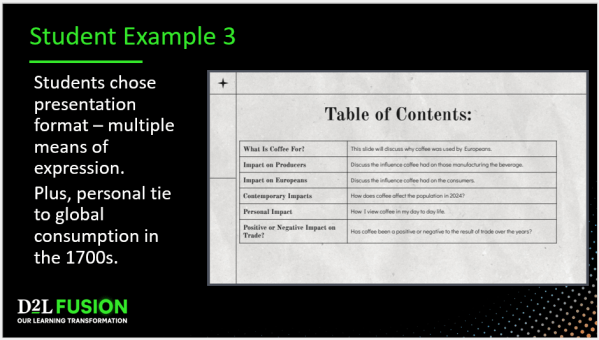
The third example is from the same class. Students had to research consumption in the 1700s and connect to a popular item.
This student created a PowerPoint presentation about Coffee, and started it with a table of contents, which I love.
She also included a slide on how coffee impacts her daily life now, and the long-term impact of the coffee trade.
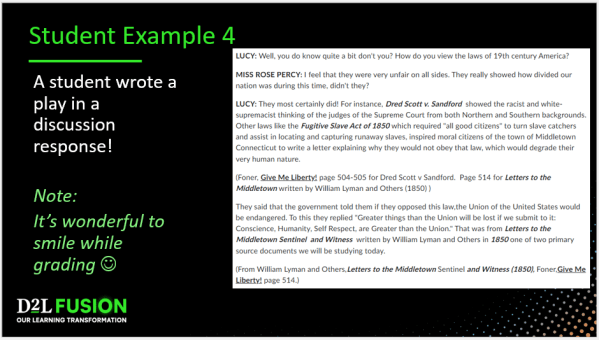
This example is from the US History course again.
A student wrote a dialogue between two characters who discuss some of the laws in 19th century America, particularly the Fugitive Slave Act of 1850, and how people felt about, or reacted to, them.
This was probably the most creative discussion post I’ve ever seen, and most of the students in the course commented on it, and enjoyed it.
Also, I made a note on this slide, because I used to dread grading the standard 5-page research papers every semester, and now, when I open an assignment and see something creative like this, I’m actually smiling while grading – my own engagement has increased as a result of the students’ work.
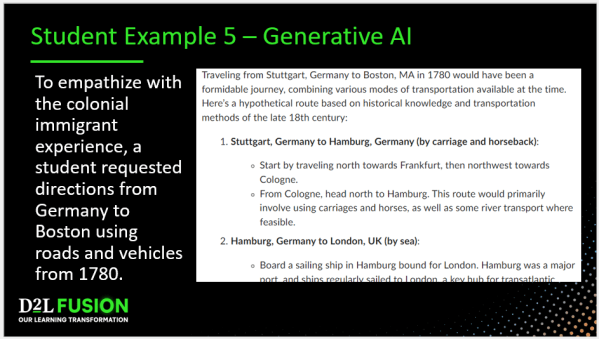
To empathize with the colonial immigrant experience, a student requested ChatGPT give him directions from Germany to Boston using roads and vehicles from 1780.
This student commented:
This journey would have been lengthy, challenging, and required significant planning and resources. It underscores the adventurous spirit and determination of travelers during that era.
I think sometimes it can be fun to have this type of discussion to see how good the technology is these days. Like ChatGPT you type in what you want to know and within couple seconds you have the answer. It’s great but also a bit scary.
Challenges and Solutions
Navigating the Roadblocks to Asynchronous Authentic Assessment
I added a handful of challenges and solutions next, because, if we were in the same room together right now, these are some questions you may have.
Common Challenges in Implementing Asynchronous Authentic Assessment:
Asynchronous authentic assessment brings numerous benefits, but it’s not without its challenges. Let’s identify these challenges and explore effective solutions to overcome them:
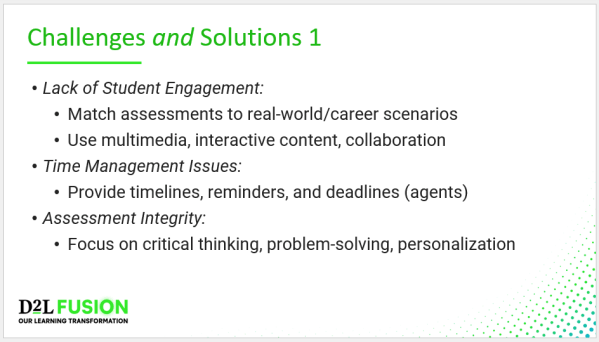
1. Lack of Student Engagement:
- Challenge: In asynchronous settings, students may struggle with motivation and engagement, especially when assessments are not perceived as relevant or interesting.
- Solution: To enhance engagement, ensure that assessments are directly linked to real-world scenarios and career readiness. Use multimedia elements, interactive content, and opportunities for collaboration to make assessments engaging.
2. Time Management Issues:
- Challenge: Students in asynchronous courses may find it challenging to manage their time effectively, leading to procrastination or rushed assessments.
- Solution: Implement clear timelines and deadlines for assessments. Provide students with a schedule and encourage them to plan their work ahead. Offer regular reminders and opportunities for time management skill development.
3. Assessment Integrity:
- Challenge: Ensuring the integrity of asynchronous assessments, especially quizzes and exams, can be challenging when students have access to external resources.
- Solution: Design assessments that focus on critical thinking, problem-solving, and application rather than simple recall of facts. Use open-ended questions, case studies, and projects that require students to apply their knowledge in unique ways.
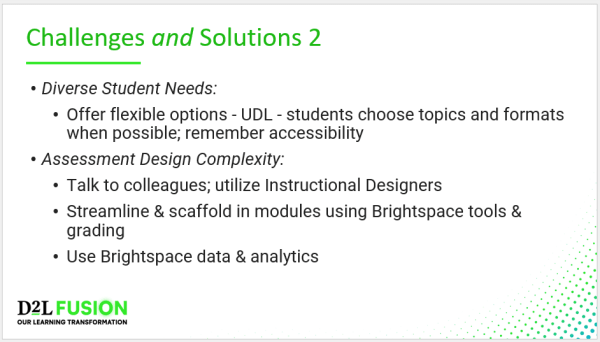
4. Diverse Student Needs:
- Challenge: Students in asynchronous courses come from diverse backgrounds, with varying access to technology, resources, and time constraints.
- Solution: Accommodate diverse student needs by offering flexible assessment options. Allow students to choose assessment topics or formats when possible. Ensure that assessment materials are accessible and provide alternative resources for students with limited access.
5. Assessment Fatigue:
- Challenge: Students may experience assessment fatigue when faced with multiple assessments or heavy workloads, leading to reduced effectiveness and engagement.
- Solution: Maintain a balanced assessment workload and ensure that assessments are spread out across the course. Prioritize quality over quantity, focusing on assessments that provide the most value in assessing authentic competencies.
6. Assessment Design Complexity:
- Challenge: Designing authentic assessments that reflect real-world scenarios can be complex and time-consuming for instructors.
- Solution: Provide instructors with training and resources on effective assessment design. Encourage collaboration among instructors to share best practices and assessment templates. Utilize Brightspace’s assessment tools and templates to streamline design.
7. Assessment Consistency:
- Challenge: Ensuring consistency in assessment grading and evaluation, especially in courses with multiple instructors or teaching assistants, can be challenging.
- Solution: Develop and share clear rubrics for assessments. Implement a review process where multiple instructors assess a sample of assessments to ensure consistency. Use Brightspace’s rubric-based evaluation to enhance transparency.
8. Accessibility and Inclusivity:
- Challenge: Ensuring that assessments are accessible to all students, including those with disabilities, can be a significant challenge.
- Solution: Familiarize instructors with Brightspace’s accessibility features and guidelines. Encourage them to create accessible content and provide alternative formats for materials when needed.
A wide range of diversity in a class can be both exciting and daunting. To help meet everyone’s needs, offer as many flexible options as you can, following the Universal Design for Learning principles. This way, students can select topics they find relevant, and can demonstrate their learning in creative ways that they will feel more connected to. In my classes, the students are allowed to demonstrate their learning in the way they are most comfortable with as long as they meet the learning objective and cite their sources; I find that the more creative projects take them longer, but they are proud of them, and generally include annotated bibliographies to clarify where each source was used.
Also, reworking your courses to include these assessments can be challenging. Reach out to colleagues or instructional designers on your campus if you need help. Break large assessments up into parts that can be scaffolded over several modules to keep them manageable, and use your Brightspace tools to your advantage.
Don’t overwhelm yourself – start a little bit at a time and, within a couple of semesters, you’ll see a change in your students’ engagement.
Conclusion

Key Takeaways:
In this presentation, we’ve explored the transformative potential of asynchronous authentic assessment in higher education, with a focus on leveraging Brightspace as a powerful platform. Here are the key takeaways:
1. Authentic Assessments Prepare Students for Real-World Success:
- Authentic assessments mirror real-world scenarios and challenges, helping students develop the practical skills and competencies they need in their future careers.
2. Brightspace Facilitates Engaging and Effective Assessments:
- Brightspace offers a rich array of tools and resources that empower educators to design, deliver, and evaluate authentic assessments seamlessly.
3. Student Engagement Is Central to Authenticity:
- Engaging students in meaningful assessment tasks is vital. Brightspace’s features, including multimedia integration and collaboration tools, enhance student engagement.
4. Data-Driven Decision-Making Drives Improvement:
- Brightspace’s assessment data and analytics enable instructors to make evidence-based decisions, enhance instructional strategies, and support struggling students.
5. Challenges Are Addressable with Effective Strategies:
- Common challenges in implementing asynchronous authentic assessments can be overcome with thoughtful solutions, fostering an equitable learning environment.
6. Student Experience Is Enhanced Through Reflective Practice:
- Providing students with opportunities for reflection and engagement in the assessment process contributes to their growth and development.
7. The Future of Higher Ed Requires Authentic Assessment:
- As the landscape of higher education evolves, the demand for authentic assessments that prepare students for real-world challenges becomes increasingly critical.
Reiterating the Importance:
Asynchronous authentic assessment is not a mere educational trend; it is a fundamental shift in higher education that prepares students for the complexities of the modern world. It equips them with the skills and competencies needed to excel in their chosen careers and make meaningful contributions to society.
In an era where adaptability, critical thinking, and problem-solving are paramount, institutions must embrace asynchronous authentic assessment as a cornerstone of effective teaching and learning. Brightspace stands as a powerful ally in this endeavor, offering a dynamic platform to create, deliver, and evaluate assessments that truly reflect the authentic competencies we aim to develop in our students.
The future of higher education is one where authentic assessments in asynchronous settings, like those facilitated by Brightspace, empower students to succeed not only in their academic journey but also in the challenges they’ll face beyond the classroom. Let’s embrace this transformation and prepare our students for a future filled with innovation, complexity, and opportunity.
Collaborate with Padlet


Sources
Abramenka-Lachheb, Victoria and de Siqueira, Amaury. “Authentic Assessments Through the Lenses of Diversity, Equity, Inclusion, and Justice in a Fully Online Course.” Journal of Teaching and Learning with Technology, Vol. 11, Special Issue, pp.18-36. Doi: 10.14434/jotlt.v11i1.34591 https://files.eric.ed.gov/fulltext/EJ1363911.pdf Dec 2022.
Ashford-Rowe, K., Herrington, J., & Brown, C. (2014). “Establishing the critical elements that determine authentic assessment.” Assessment & Evaluation in Higher Education, 39(2), 205–222. https://doi.org/10.1080/02602938.2013.819566 Published Version: https://doi.org/10.1080/02602938.2013.819566 Document Version: Author’s Version 2013
Dixon, Amanda. “A Review of the Impact of Authentic Assessment on the Student Experience & Engagement in an Online Regulatory Environment Module.” Irish Journal of Academic Practice: Vol. 10: Iss. 2, Article 6. doi:https://doi.org/10.21427/4w9w-3w46 Available at: https://arrow.tudublin.ie/ijap/vol10/iss2/6 2022.
Ellis, Cath; van Haeringen, K; Harper, R; Bretag, T; Zucker, I; McBride, S; Rozenberg, P; Newton, P; & Saddiqui, S. “Does authentic assessment assure academic integrity? Evidence from contract cheating data.” Higher Education Research & Development, 39:3, 454-469, DOI: 10.1080/07294360.2019.1680956 2020.
Gedera, Dilani. “A Holistic Approach to Authentic Assessment.” Asian Journal of Assessment in Teaching and Learning,13(2), 23–34. https://doi.org/10.37134/ajatel.vol13.2.3.2023 2023.
Kearney, Sean. “Improving engagement: the use of ‘Authentic self- and peer-assessment for learning’ to enhance the student learning experience.” Assessment & Evaluation in Higher Education. Vol. 38, No. 7, 875–891 http://dx.doi.org/10.1080/02602938.2012.751963 2013.
McArthur, Jan. “Rethinking authentic assessment: work, well‐being, and society.” Higher Education (2023) 85:85–101 https://doi.org/10.1007/s10734-022-00822-y 2022.
Raynault, Audrey; Heilporn, Géraldine; Mascarenhas, Alice; Denis, Constance. “Teaching Experiences of E-Authentic Assessment: Lessons Learned in Higher Education.” Journal of Teaching and Learning with Technology, Vol. 11 Special Issue, pp3-17 Dec 2022.
Sokhanvar, Z., Salehi, K., & Sokhanvar, F. “Advantages of authentic assessment for improving the learning experience and employability skills of higher education students: A systematic literature review.” Studies in Educational Evaluation, 70, 101030. 2021.
Sotiriadou, Popi; Logan, D; Dalyc, A; and Guest, R. “The role of authentic assessment to preserve academic integrity and promote skill development and employability.” Studies in Higher Education, 2020, VOL. 45, NO. 11, 2132–2148 https://doi.org/10.1080/03075079.2019.1582015 2015.
Sutadji, E et al. “Adaptation strategy of authentic assessment in online learning during the covid-19 pandemic” J. Phys.: Conf. Ser. 1810 012059, 2021.
Thanh, B. N., Vo, D. T. H., Nhat, M. N., Pham, T. T. T., Trung, H. T., & Xuan, S. H. “Race with the machines: Assessing the capability of generative AI in solving authentic assessments.” Australasian Journal of Educational Technology, 39(5), 59-81. 2023.
UDL Guidelines https://udlguidelines.cast.org/
Wiggins, Grant. “The case for authentic assessment.” Practical Assessment, Research & Evaluation, 2(2). Available online: http://PAREonline.net/getvn.asp?v=2&n=2. 1990.
About the Author
 Beyond another Paper